

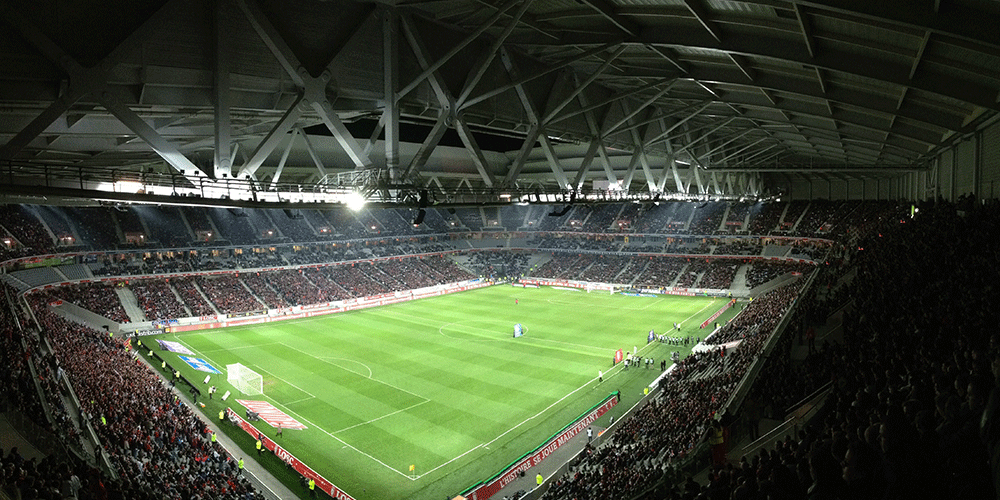
Stadiums and sports grounds are now welcoming larger crowds than ever before, with many venues hosting concerts, festivals and community events as well as sport. This means that security expectations have changed significantly, and modern venues need to protect spectators, staff, players and infrastructure while still maintaining a positive fan experience.
Security planning now extends far beyond stewarding and CCTV, with things like physical access control, crowd management, perimeter protection and technology all playing important roles. In this article, we explore how stadium security is evolving in 2026 and why access control systems remain at the centre of a modern security strategy.
Crowd management
Effective crowd management needs to start before spectators arrive. Entry strategies should consider the expected attendance figures and arrival patterns, as well as public transport links, parking facilities and the number and location of entrances to the stadium. Poor entry planning can create congestion and long queues, which become a safety risk and a security concern. Modern venues increasingly use staggered entry recommendations and digital communications to spread arrivals across a longer period.
It is also essential that queues are managed to avoid frustration, disorder, bottlenecks and unsafe crowded densities. Physical barriers, channel systems and clear signage can create orderly queues, and staff and stewards should be positioned to assist spectators and identify issues before they can escalate. Good queue management improves security and the experience of the spectator.
The flow of the crowd throughout the facility is also important. Your security planning needs to look at movement through concourses as well as access to seating areas. It should also consider catering, retail zones, toilets and other facilities. Providing clear routes can reduce confusion and minimise the build-up of any crowds. The aim is to create predictable movement patterns that reduce risk and improve safety.
The importance of secure access control
Turnstiles remain one of the most important access control tools in sports grounds as they provide controlled one-person-at-a-time entry. They integrate with ticketing systems, membership systems and access control platforms to help venues manage capacity and maintain accurate attendance records. Turnstiles can also be used to reduce opportunities for tailgating and unauthorised entry.
Digital ticket validation is increasingly important. There are modern systems that can instantly verify a range of mobile tickets, QR codes, membership cards and season tickets. These validation systems help to reduce ticket fraud and prevent duplicate ticket use and improve entry speeds. The integration between ticketing and access control provides greater visibility for venues over their attendance levels.
Stadiums must also prevent individuals from entering without valid authorisation through ticket fraud, tailgating, gate rushing or deliberate stadium incursions. Secure access control systems help to identify invalid tickets before entry is granted. These controlled access points also allow stewards and security personnel to monitor activity more effectively. Access control systems need to protect not only spectator areas, but also player zones, hospitality areas, media facilities and operational spaces.
Perimeter security
Perimeter fencing provides an outer security boundary to a sports ground. It can help to deter unauthorised access and define secure areas whilst guiding spectators towards approved entrances. It needs to be robust enough to provide security without creating safety concerns during crowd movement.
Gates are also needed as controlled access points into the venue perimeter. They allow security teams to direct spectators and manage vehicle access whilst separating different user groups. These gates should be positioned to support crowd flow and avoid creating bottlenecks.
Most stadium security relies on multiple layers rather than a single security measure. This can include a combination of perimeter fencing, vehicle barriers, controlled gates, turnstiles and internal access control systems. If one layer is challenged, the additional layers can continue to provide protection, creating a more resilient security strategy.
Lessons from Wembley and other major events
The Euro 2020 final at Wembley saw large numbers of individuals gain unauthorised access to the stadium. The incident demonstrated the importance of robust perimeter security and effective ticket validation. It also raised issues around sufficient stewarding and well-planned crowd management procedures.
Following several high-profile crowd management incidents, major venues have invested heavily in security improvements. There have been Champions League security enhancements that include additional access control measures and improved ticket verification systems. They have also increased their security staffing and worked on better crowd monitoring. Their security planning now receives far greater scrutiny from governing bodies and venue operators.
Stadium operators have increasingly adopted a proactive approach to security, with greater emphasis on preventing incidents rather than reacting to them. They now have integrated security systems, data-driven crowd management and a continuous review of procedures to ensure that lessons from major events continue to influence security planning across the industry.
Technology’s growing role
Digital ticketing has become standard across many professional sports venues. This helps to reduce fraud and provider faster entry to the venue, whilst also offering better attendance tracking and improved operational efficiency. Mobile ticketing also reduces the need for printed tickets.
Modern stadium access control systems increasingly operate as part of a wider security ecosystem, integrating ticketing, turnstiles and visitor management with CCTV and monitoring platforms. This provides a more complete picture of venue activity.
Real-time monitoring is also in place to help security teams respond faster to issues. Their monitoring systems can provide information on crowd density and entry rates. It also looks at occupancy levels and highlights any secure incidents. This increased visibility ensures venues can make informed operational decisions during the events.
Emergency planning and safe egress
Security planning must consider how spectators leave the venue during an emergency. Exit routes should be clearly marked, well lit, free from obstruction and capable of accommodating the venue’s capacity.
Technology cannot replace trained personnel. Stewards play a vital role in guiding spectators, managing queues, supporting evacuations and responding to incidents. Effective stewarding can often prevent minor issues from escalating into major problems.
Understanding venue capacity is fundamental to safety. Access control systems help operators monitor attendance levels in real time, reducing the risk of overcrowding while supporting emergency planning and licensing compliance. Safe egress should always be considered alongside entry management.
Modern stadium security relies on physical infrastructure, operational planning and technology working together. Turnstiles, gates and perimeter protection remain central to sports ground access control, but their effectiveness depends on how they support wider crowd management and safety procedures. Venues that take a joined-up approach are better equipped to protect spectators and deliver a safe, enjoyable event experience.
Keep your stadium safe and secure
We recently partnered with FC Business, an online sports publication, to help drive forward the conversation about stadium security and the ongoing need for access control security at stadiums, sports grounds and training facilities.
Newgate Secured Access Solutions are the ideal provider for your bespoke stadium access solutions. We understand that fan and staff safety comes first and so we will work with you to help you get the security that you need.
Contact us via phone on 01636 700172, or email at sales@newgate.uk.com, or fill out a form over on our contact page.
